
Brooklyn Park City Directory Collections
Brooklyn Park historical research starts with Hennepin County Library Special Collections at Minneapolis Central and its Digital Collections. The library documents directories that can carry names, household relationships, addresses, business names, and marks for an owner, renter, roomer, or widow. The important limit is equally clear: the official collection pages do not verify a complete Brooklyn Park-only run. Minneapolis and Hennepin-area material is extensive, but the right approach is to check the precise place, year, and volume instead of claiming that every Brooklyn Park household appears.
| Collection | Years | Where Held | Access |
|---|---|---|---|
| HCLIB digitized Minneapolis directories | 1859-1950 | HCLIB Digital Collections | Free name or address searching where digitized |
| HCLIB directory guide | 1859-1922 digital; 1922-present print or microfiche | Digital Collections and Minneapolis Central | Free online material; later volumes in person, with 1923-1929 PDFs |
| MNHS Hennepin-area directory holdings | 1859-1983 | Minnesota Historical Society collection | Staff can search one name or business across up to five years |
| Yearbooks and local newspapers | Varies by school and title | HCLIB Special Collections and licensed resources | Digital or library access varies by item |
The collection spans are not publication promises for one municipality. HCLIB describes its digitized phone books and directories as covering Minneapolis and more than a dozen Hennepin County cities and towns, while MNHS names a broader group of Hennepin communities. Ask for the Brooklyn Park run and the reverse-address volume for the period at issue. That direct question saves time when a title is present but its geographic coverage is not obvious for Brooklyn Park research.
Note: Exact Brooklyn Park publishers, first year, and final printed year were not verified in the official collection landing pages.
Brooklyn Park Digital Directories
HCLIB Digital Collections provides the strongest online entry point for a Brooklyn Park historical-volume inquiry. Its documented search concepts include name, last name, address, one directory, or all directories. Digitized items can be viewed, printed, and downloaded. A result is most useful when the researcher records the title, year, page, spelling, and whether the name came from a name index or an address-first section.
Hennepin County Library's genealogy and local-history service supplies the companion routes when an item is not online. It points Brooklyn Park researchers to Special Collections for directories, yearbooks, newspapers, maps, photographs, manuscripts, and library databases. Ancestry Library Edition, FamilySearch affiliate access, Fold3, Gale Genealogy, and other tools have their own access conditions. A search result is a dated clue, not a current address.
The digitized directory interface is shown in the image below. It is useful for deciding whether an address, surname, or a selected volume is the best first search.
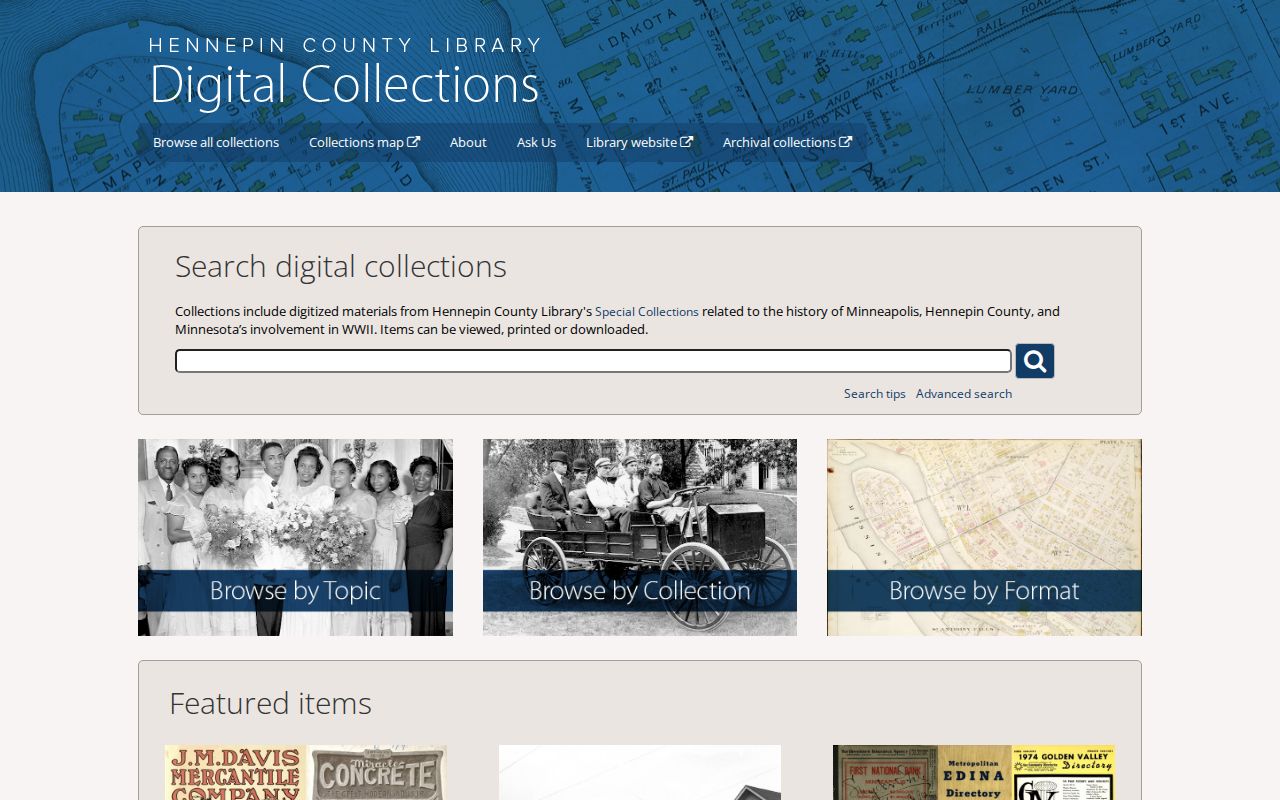
When a digital search produces no match, try initials, surname variants, and an address-first search before treating the absence as meaningful.
Brooklyn Park Directory Shelves
The library guide divides access by era. Directories from 1859 through 1922 are described as free, digital, and keyword searchable. Material from 1922 forward is chiefly print or microfiche at Minneapolis Central, with PDF runs for 1923 through 1929. That split matters for Brooklyn Park because a search box cannot replace the later physical shelf. For a missing online year, bring both the name and the address, then check the volume's abbreviation key before reading a line.
MNHS offers a separate staff-search route through its Hennepin County Public Library directory holdings. The service covers one name or business across up to five years for $10 plus a $5 nonrefundable processing charge. It is a practical fallback when a Brooklyn Park date range is narrow, but it does not establish that a particular Brooklyn Park volume exists. The request should state the known spelling, approximate years, and the city or address tied to the inquiry.
Note: Print and microfiche access remains necessary for later material even when an earlier volume is digitized.
Reading Brooklyn Park City Directory Entries
A historical directory entry is a compact publication record, not a modern profile. HCLIB's house-history guidance describes entries that may list surname and given name, a spouse in parentheses, occupation, business or employer, street address, and markers such as owner, renter, roomer, or widow. Copy the spelling, punctuation, initials, and marks as printed. The exact abbreviation key for a Brooklyn Park-specific run was not located, so its symbols should be read from that volume rather than expanded by guesswork.
| Name | The printed surname, given name, initials, and sometimes a spouse in parentheses. |
|---|---|
| Address | The listed street address or business location, which should be checked against the year. |
| Occupation line | A short historical description that may identify a business connection. |
| Household marker | Owner, renter, roomer, widow, or a similar volume-specific abbreviation. |
| Source citation | Directory title, year, page, and the index or criss-cross section used. |
Those fields must stay separate. A listed person can be a roomer, a business contact, or a person who had already moved when the directory was issued. An owner notation also does not prove present occupancy in Brooklyn Park. Match the entry to another dated source before drawing a family or address conclusion.
- Criss-cross directory
- An address-order section that lets a researcher start with a house number and street, then identify listed occupants.
- Householder index
- A name-oriented listing used to follow one person or household across a volume.
- Abbreviation key
- The volume's explanation of its shortened marks; photograph or transcribe it before interpreting an entry.
Brooklyn Park Criss-Cross Directories
When the name is unknown, the reverse or criss-cross method begins with the address. Find the street and number in an address-order directory, then copy every occupant name exactly, including initials, household labels, misspellings, and business lines. Check the same Brooklyn Park address in the preceding and following directory years. Once a likely person appears, move to name indexes and supporting records. This method respects the difference between a historical occupant, a taxpayer, and a present-day resident.
The house-history guide also pairs reverse directories with plats, lot surveys, newspapers, census pages, and maps. Street names, municipal boundaries, and numbering can change. Brooklyn Township's earlier geography and later Brooklyn Park city status mean an old source may use a township, village, postal, or neighboring-city label. Preserve the original label first, then compare it with a dated map or legal description.
For current address-keyed records, use the Brooklyn Park street directory rather than extending an old criss-cross entry into a claim about who lives there now.
Brooklyn Park Directory Timeline
The collection dates create a useful research timeline even though a complete Brooklyn Park run remains unverified. HCLIB and MNHS document Hennepin-area directory material beginning in 1859. HCLIB distinguishes the 1859-1922 digital range from later print and microfiche, while MNHS describes its Hennepin collection through 1983. The different access layers show why a historical directory search may pass from a web result to a library shelf or a staff request.
- 1859: HCLIB and MNHS describe the beginning of the documented Hennepin-area directory material.
- 1859-1922: HCLIB's guide identifies free, keyword-searchable digital directories.
- 1923-1929: HCLIB notes PDF directory runs.
- 1922-present: The guide directs researchers chiefly to print and microfiche at Minneapolis Central.
- 1983: MNHS describes the outer end of its Hennepin County Public Library directory collection span.
Brooklyn Park became a village in 1954 and a charter city in 1969, but older Brooklyn Park material can reflect the broader township context. Treat the chronology as an aid to asking for the right item, not as proof that a local publication began or ended on those civic dates.
Brooklyn Park Directories and Census
Pair a directory year with the nearest public census, then compare the address, spelling, household members, and date. Federal census records are public after 72 years, and the 1950 census is the latest publicly available federal census in this research. Minnesota Historical Society People Records also covers state censuses for 1849, 1865, 1875, 1885, 1895, and 1905. The census is an enumeration-day snapshot, while a volume is a publication snapshot, so disagreement can be a timing issue rather than an error.
The National Archives 1950 census access page is represented below. Use it to compare a household near the directory year, allowing for different house numbers, boundaries, and spellings.
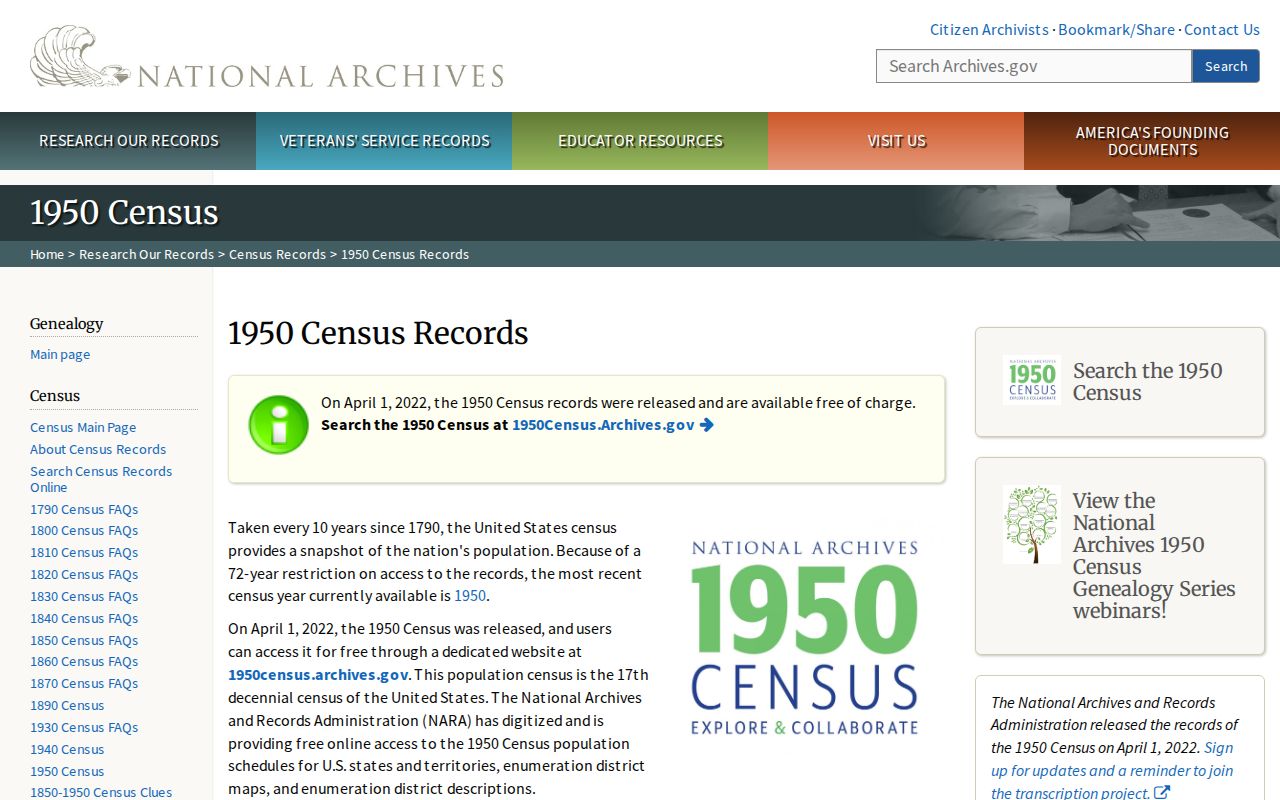
A census match strengthens a dated household trail, but it still needs a place and year check when a name is common.
Brooklyn Park Directory Cross-Checks
Newspapers, yearbooks, vital indexes, and obituaries can test a Brooklyn Park historical directory lead. HCLIB identifies pre-1989 digital yearbooks, which can establish a former school connection without proving a current address. Its historical newspaper resources include the Minneapolis Tribune from 1867 through 1922, the Minnesota Digital Newspaper Hub, and other library access. MNHS People Records supports historical name searching with starts-with, sounds-like, contains, and exact approaches, which is helpful when a directory uses initials or a changed surname.
Minnesota Historical Society People Records is pictured below. Its historical indexes offer an independent date or county check before a directory entry is attached to a life event.
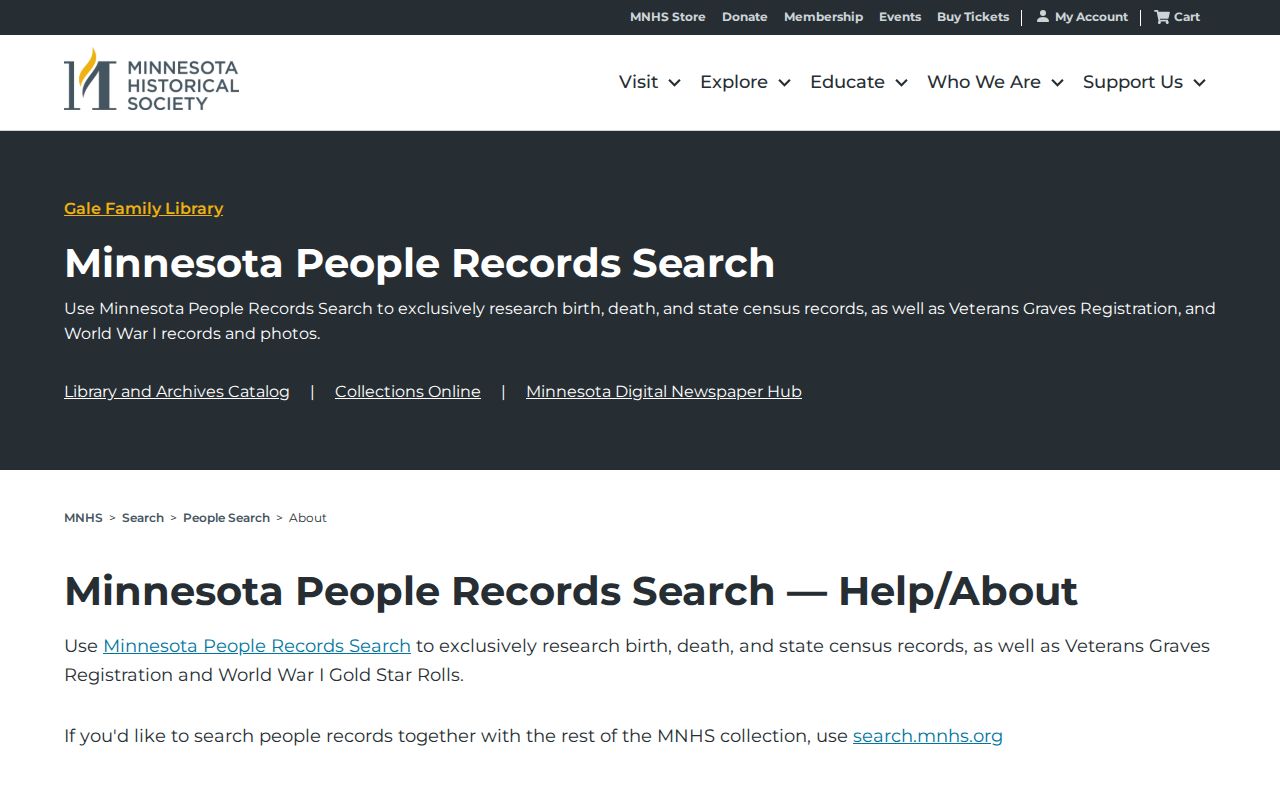
For a hard-to-find obituary, MNHS will search one individual in up to two newspapers, with supplied name, date, county or city, and extra context. The service lists $10 plus a $5 processing charge and estimates three to four weeks, sometimes as long as 12 weeks.
MNHS's city-directory search service is also a documented staff route for a focused name or business request. Its service page clarifies the limited scope before a researcher pays for a search.
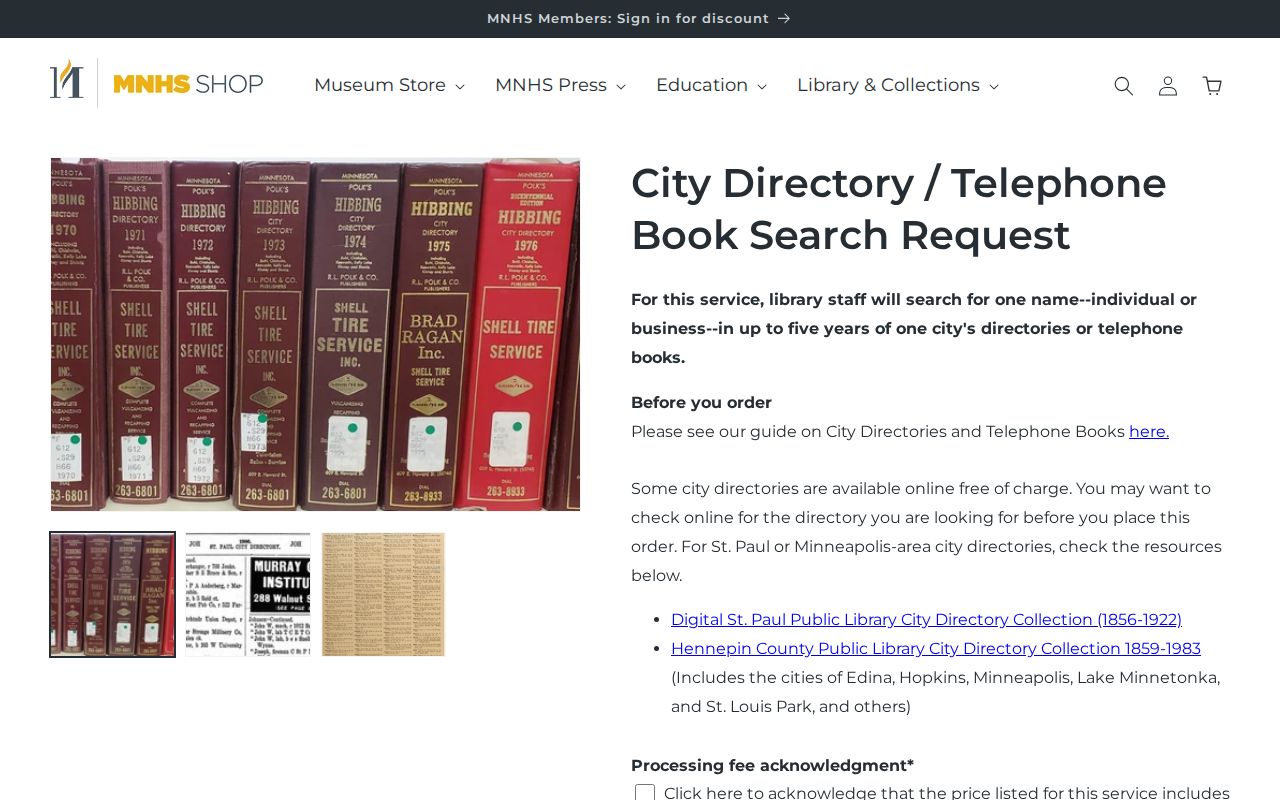
Use the service for a bounded historical question, then retain the returned source details with the rest of the household trail.
Brooklyn Park Historical Archives
Hennepin History Museum's archives add a local layer of photographs, maps, letters, books, blueprints, diaries, yearbooks, postcards, and directories. The official archive page does not verify Brooklyn Park-specific directory years or a sample entry. Ask for a name or place search and cite the collection and item rather than treating an uncatalogued image as a public roster.
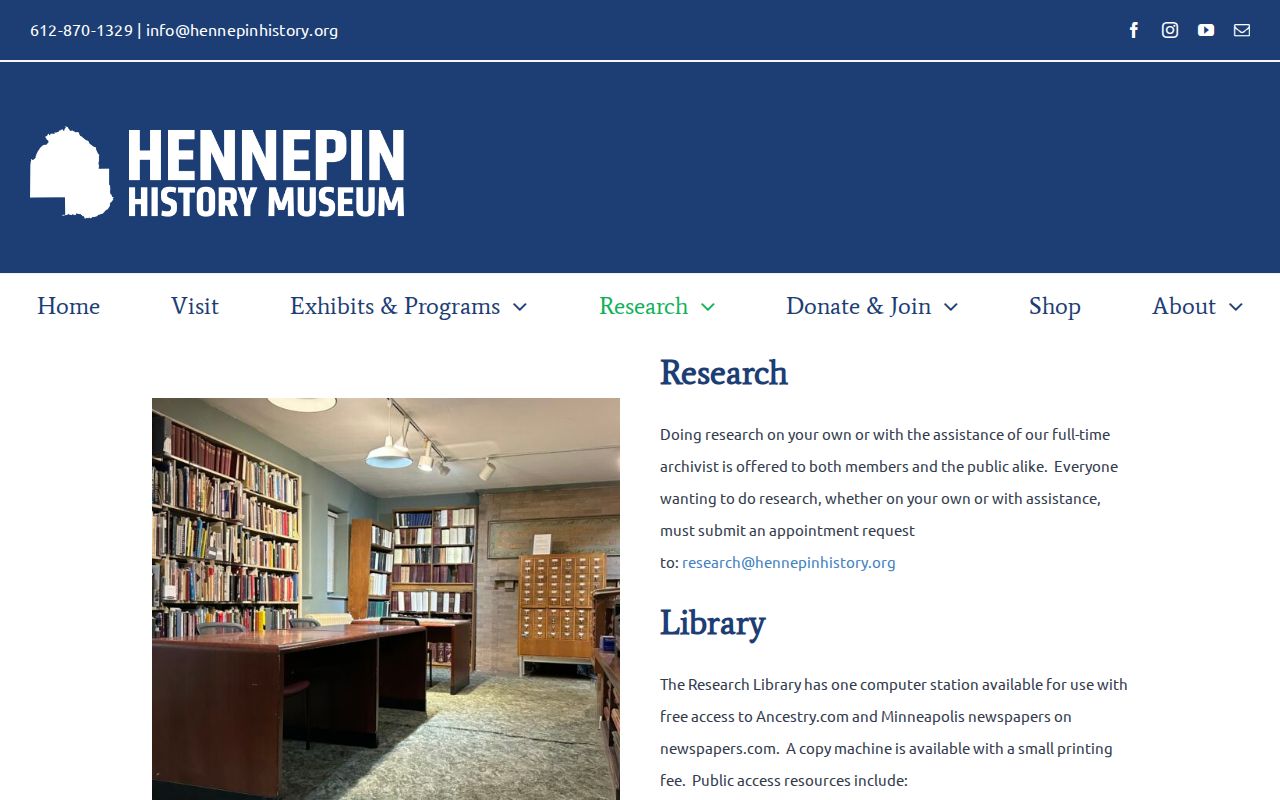
Archive material can explain a Brooklyn Park neighborhood, organization, or house history that a printed listing only hints at.
The Eidem Farm record trail shows the value of local context. City history records a federal deed to John D. and Mary Berry in 1856, a transfer to Silas Merrill in 1857, an 1894 Eidem purchase, and city acquisition in 1976. The Eidem family's earlier Johnson surname is also a reminder to retain variant names. It is a documented local example, not a model to impose on every address.
Trace Brooklyn Park City Directories
Follow one Brooklyn Park household through dated city directories, not one isolated line. Start with the strongest known year, compare adjacent volumes, and use a census or vital index only as a cross-check. When a listing vanishes, the explanation may be a move, death, a changed name, a business-only entry, or a gap in the collection. A disappearance never proves a single answer.
- Find the earliest likely listing by exact surname, initials, or street address.
- Transcribe the full entry and its page, including every abbreviation and household marker.
- Check the next and prior directory years for the same name and address.
- Use the criss-cross section to compare the address with other listed occupants.
- Pair the dated trail with census, newspaper, obituary, deed, or vital-index evidence.
HCLIB Special Collections, its Digital Collections, MNHS staff service, newspaper resources, and historical archives are complementary channels. Use the online item first when it exists, the print or microfiche shelf for later volumes, a focused staff request for a narrow span, and an archive inquiry for unique local material. That sequence preserves the limits of each record while giving a Brooklyn Park family-history search several documented ways forward.
Note: A directory listing is a useful historical address clue, not proof of ownership, current occupancy, or every person in a household.